


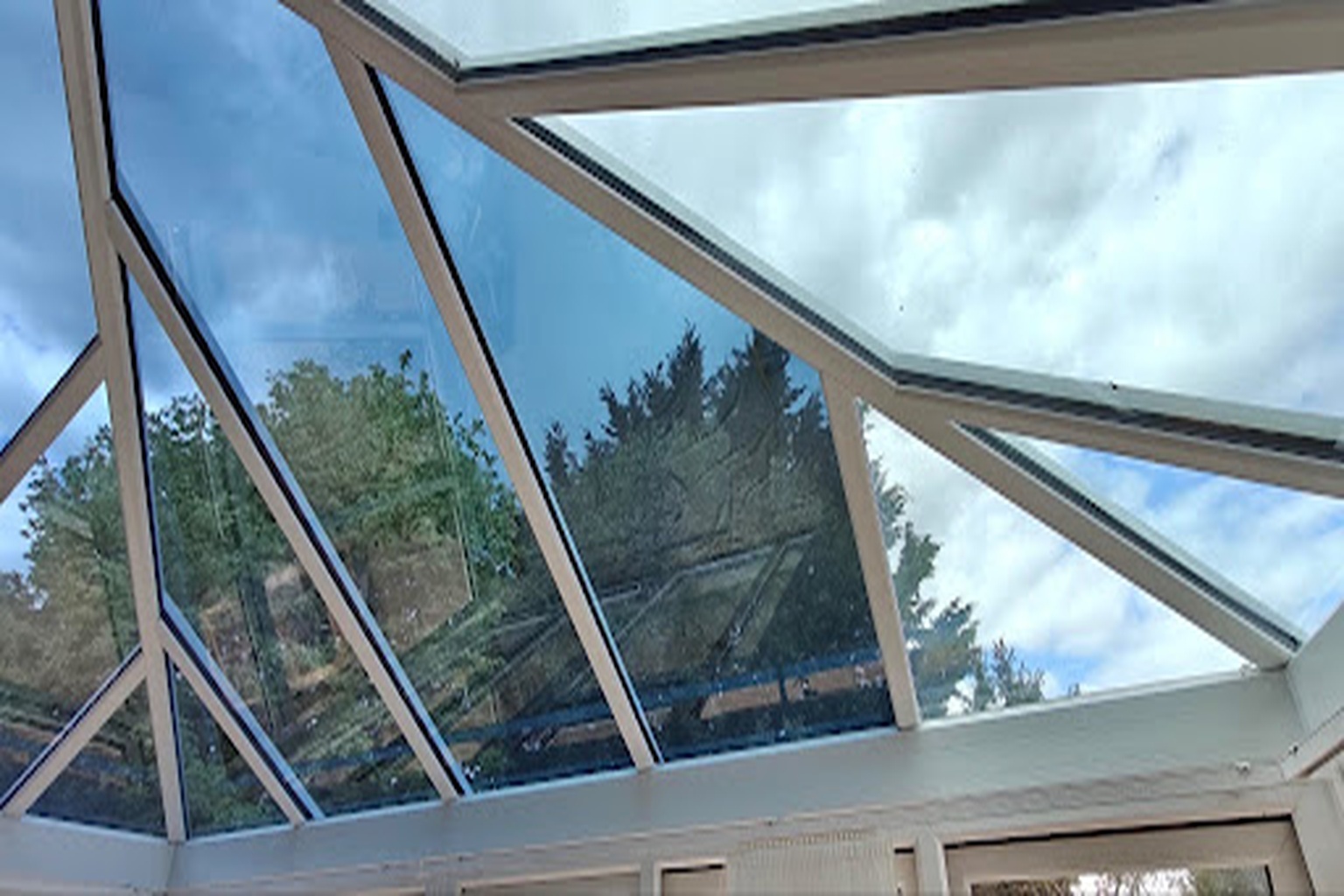
Best Window Film for Conservatories: Solar Control vs Reflective vs Neutral Film
Reflective solar control film is the best all-round choice for most UK conservatories, cutting solar heat by up to 70–80%; neutral film suits homeowners who want heat reduction without changing how the glass looks.
Which Window Film Is Best for a Conservatory?
The best window film for most UK conservatories is a reflective solar control film, which rejects up to 70–80% of solar heat and cuts glare by as much as 83%. If you’d rather keep the natural look of your glass, a neutral (non-reflective) film offers moderate heat reduction – typically 30–50% – with clearer views and no mirrored finish. Both block around 99% of UV rays.
What Is Conservatory Window Film?
Conservatory window film is a thin, self-adhesive polyester layer applied to the glass or polycarbonate panels of your conservatory. It works by reflecting or absorbing solar energy before it passes through the glazing, which keeps the room noticeably cooler in summer, reduces glare on screens and furnishings, and filters out the UV rays that fade fabrics and flooring.
It’s a popular upgrade in the UK for one simple reason: conservatories trap heat. All that glazing acts like a greenhouse, and on a sunny July afternoon an untreated conservatory can become too hot to sit in. Film is a fraction of the cost of replacement solar glass or air conditioning, can usually be fitted in a day, and – on glass – is removable if you change your mind. Quality films typically last more than 10 years indoors, with some external-grade products carrying warranties of up to ten years as well.
Why Do Conservatories Get So Hot in Summer?
Glass lets short-wave solar radiation in but stops the longer-wave heat from escaping – the classic greenhouse effect. South- and west-facing conservatories suffer most, and polycarbonate roofs, common on older builds, offer very little solar protection. Blinds help with glare but sit inside the glass, so much of the heat has already entered the room. Window film intercepts solar energy at the glazing itself, which is why it outperforms internal blinds for temperature control.
The Three Main Types of Conservatory Window Film
Solar Control Film
Solar control is the umbrella category: any film engineered to reject solar heat, glare and UV. Reflective and neutral films are both types of solar control film – the difference lies in how they manage the sun and how they look once installed. Performance is measured by Total Solar Energy Rejected (TSER): the higher the figure, the cooler your conservatory stays.
Reflective Window Film
Reflective film has a metallised, mirror-like finish that bounces solar energy away from the glass. It’s the strongest performer, rejecting roughly 70–80% of solar heat and reducing glare by up to 83% on premium products such as dark silver films. As a bonus, the mirrored exterior gives you daytime privacy – useful for conservatories overlooked by neighbours.
Neutral (Non-Reflective) Window Film
Neutral film – sometimes sold as “natural” or “clear” solar film – is designed to be barely noticeable. Visible light transmission ranges from around 20% to 85%, so, with the right film your conservatory stays bright and the glass keeps its original appearance. Heat rejection is more modest, typically 30–50%, but UV protection remains comparable to reflective film at 99%.
Reflective vs Neutral Film: Side-by-Side Comparison
Feature | Reflective film | Neutral film |
Solar heat rejection (TSER) | 70–80% | 30–50% |
Glare reduction | Up to 83% | Moderate at 35%+ |
UV protection | ~99% | ~99% |
Visible light transmission | 5–50% | 5–85% |
Daytime privacy | Yes (mirrored exterior) | No |
Appearance | Metallic, mirror-like | Virtually unchanged at 50%+ |
Typical use | South-facing glass, conservatory roofs | View-critical rooms, lighter aspects |
Which Window Film Should You Choose?
Match the film to your conservatory’s aspect, roof material and how you use the space:
- South- or west-facing with a glass roof: reflective film, applied to the roof and the worst-affected elevations. It’s the only option that meaningfully tackles extreme summer heat.
- Overlooked garden: reflective film doubles as daytime privacy glazing.
- North- or east-facing, or a shaded plot: neutral film – you’ll ease glare and UV damage without sacrificing light you actually need.
- Home office in the conservatory: either type works, but prioritise glare reduction so screens stay readable; a mid-range reflective film is usually the sweet spot.
- Unsure of your glass type: choose a medium-grade film. Darker, high-absorption films should only be fitted to toughened glass, as they can stress older annealed panes.
Glass or Polycarbonate Roof? It Matters
Standard window film is made for glass. Polycarbonate roofs need a dedicated polycarbonate film – usually fitted internally for ease, but can also be fitted externally – because ordinary glass films won’t adhere properly. Most installers also recommend external-grade film for modern double – or triple-glazed roof units, as rejecting heat outside the sealed unit reduces thermal stress on the glazing. If in doubt, ask your supplier for a glass compatibility check before ordering – reputable UK firms offer this free.
Frequently Asked Questions
Does window film really keep a conservatory cooler?
Yes. A quality reflective solar film rejects up to 80% of incoming solar energy, which can make a conservatory feel several degrees cooler on hot days. Neutral films offer a gentler 30–50% reduction.
Will window film make my conservatory dark?
Not necessarily. Neutral films can transmit up to 85% of visible light, and even mid-range reflective films let in enough light for everyday use. Only the darkest tints noticeably dim a room. The trade off is that you don’t usually get the heat or glare control.
Can I fit conservatory window film myself?
DIY kits are widely available and most internal films are applied with a soapy-water solution and squeegee. That said, roof panels and external films are awkward and are best left to a professional installer.
Does window film help in winter too?
Some low-emissivity (low-E) solar films reflect a portion of internal heat back into the room, improving winter comfort – worth considering if you use the conservatory year-round.



Leave a comment